
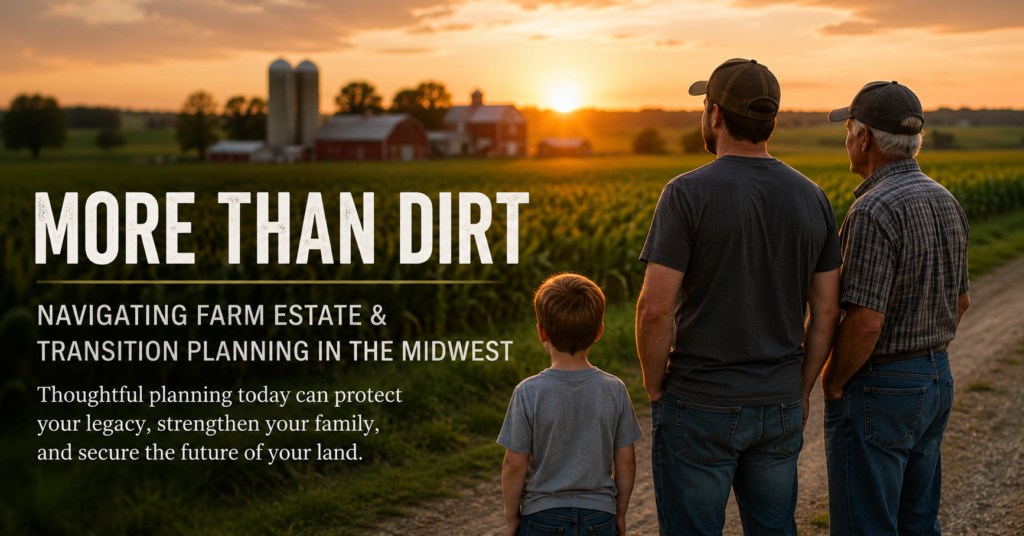
Across the Midwest, farmland is more than an asset on a balance sheet — it is legacy, identity, history, and often the foundation of an entire family’s future. Whether it’s a century farm in Minnesota, a cattle operation in the Dakotas, or a row crop enterprise in Iowa, conversations around estate and transition planning are becoming increasingly urgent as landowners age and family operations grow more complex.
Yet for many families, these discussions are delayed until a health event, financial crisis, or sudden loss forces decisions to happen quickly. By then, emotions are heightened, communication can be strained, and opportunities for thoughtful planning may already be limited.
The reality is this: transition planning is no longer optional for Midwest farm families. It is one of the most important conversations a family can have.
The Midwest is Facing a Generational Shift
A significant percentage of farmland across the Midwest is owned by individuals over the age of 65. Many of these landowners have spent decades building their operations through long hours, financial discipline, and resilience through difficult markets and unpredictable weather.
For some, the farm represents retirement security. For others, it symbolizes sacrifice and stewardship. And for nearly all, the question becomes deeply personal:
What happens to the farm when I’m no longer running it?
At the same time, younger generations are trying to determine their own future in agriculture. Some children may want to farm full-time. Others may have moved away but still feel emotionally connected to the land. Some families include multiple siblings with vastly different expectations regarding ownership, inheritance, and management.
These realities create a delicate balancing act between fairness, financial practicality, and preserving family relationships.
Why Transition Conversations Become Emotionally Charged
Estate and transition planning involves far more than taxes and legal documents. It often touches on identity, control, trust, and family dynamics that may have existed for decades.
In Midwest farm families, common emotional challenges include:
These conversations can quickly become emotional because the stakes are high — both financially and personally.
For many aging landowners, the farm is not simply property. It is their life’s work.
Multi-Generation Ownership Adds Complexity
Today’s operations often involve multiple LLCs, trusts, partnerships, rented ground, machinery ownership structures, and family members participating at varying levels.
In many Midwest operations, ownership may already span two or three generations simultaneously. Grandparents may still own land, parents manage operations, and grandchildren are beginning to enter the business.
Without a clear transition strategy, this complexity can create confusion and unintended consequences, including:
Proactive planning helps families create clarity before difficult moments arise.
Transition Planning is About Communication First
One of the biggest misconceptions about estate planning is that it starts with attorneys and paperwork. In reality, it begins with honest conversations.
Families who navigate transitions successfully often prioritize:
Open Communication
Transparent conversations reduce assumptions and help align expectations among siblings and generations.
Defined Goals
Every family’s priorities are different. Some want to preserve the operation at all costs. Others prioritize equal inheritance. Some focus on retirement income and long-term care planning.
Professional Guidance
Attorneys, financial advisors, accountants, lenders, and transition specialists can help families navigate difficult topics objectively.
Gradual Transition
Many successful transitions happen over years — not overnight. Gradually transferring management responsibilities and ownership can reduce stress for everyone involved.
The Cost of Waiting
Unfortunately, many Midwest families postpone planning because the conversations feel uncomfortable. But waiting often increases the risk of conflict and financial strain.
Unexpected health issues, long-term care expenses, or sudden deaths can leave families making major decisions under emotional pressure.
Without a plan, surviving family members may face uncertainty around:
The longer planning is delayed, the fewer options families typically have.
Preserving Both the Farm and the Family
At its core, estate and transition planning is not just about transferring assets. It is about preserving relationships, honoring legacy, and creating opportunities for future generations.
For Midwest farm families, the goal is rarely just financial efficiency. It is about ensuring the farm remains productive, sustainable, and connected to the family’s values for years to come.
The best transition plans recognize both the emotional and practical realities involved. They create space for difficult conversations while providing structure and direction for the future.
Because in agriculture, legacy matters.
And the strongest plans are the ones built before a crisis forces the conversation.
Start the Conversation Before It Becomes Urgent
No two farm families are alike, and every operation carries its own history, goals, and challenges. While estate and transition planning often involves attorneys, accountants, and financial professionals, having knowledgeable agricultural real estate guidance can also play an important role in the process. Nikolaisen Land Company can assist families by providing farmland valuations, helping navigate land partition discussions, coordinating land sales or auctions, and offering insight into current Midwest land markets. Whether your family is beginning transition conversations or working through ownership decisions, Nikolaisen Land Company is available to be a trusted resource as part of your professional team.