
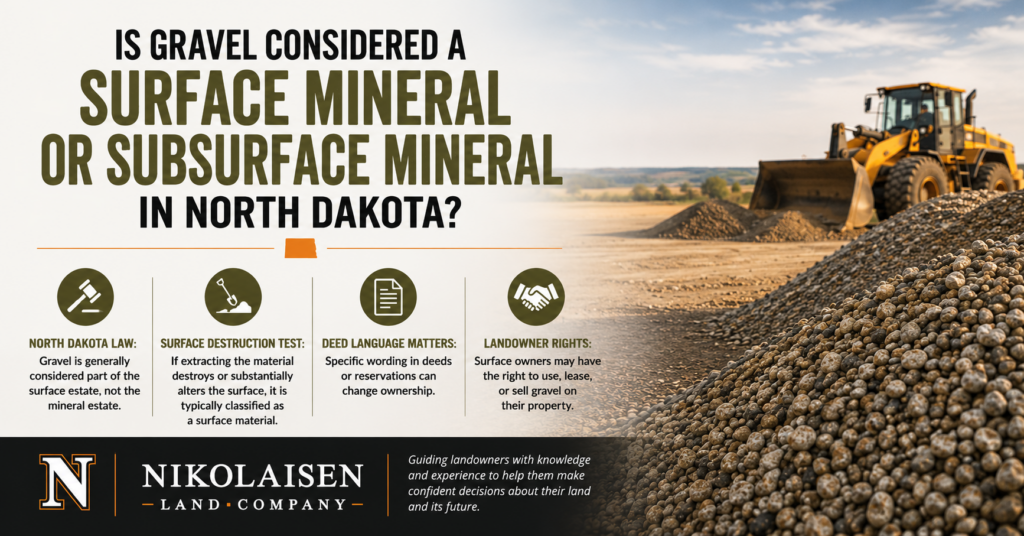
One of the most common questions landowners ask in North Dakota is whether gravel belongs to the surface owner or the mineral owner. The answer matters because gravel can have significant value for road construction, oilfield development, farming operations, and commercial extraction.
In North Dakota, gravel is generally considered part of the surface estate rather than the subsurface mineral estate.
Understanding Surface Rights vs. Mineral Rights
When land ownership is divided in North Dakota, there are often two separate estates:
North Dakota law has long recognized that some substances belong to the surface owner even if mineral rights have been severed.
How North Dakota Courts View Gravel
North Dakota courts generally classify gravel as part of the surface estate because:
Unlike oil and gas, gravel cannot typically be removed without directly disturbing the land itself. Because of this, courts often consider gravel more similar to soil, sand, and clay than to traditional underground minerals.
The “Surface Destruction Test”
North Dakota follows principles similar to what many states call the “surface destruction test.”
This means courts examine whether extracting the material would:
Since gravel extraction almost always requires excavation from the surface downward, it is generally treated as belonging to the surface owner unless a deed specifically states otherwise.
Why This Matters for Landowners
Gravel can become extremely valuable in:
A landowner who owns the surface estate may have the right to:
However, ownership can become complicated if old deeds or reservations specifically mention:
Because older deeds vary widely, title review is extremely important!
Important Exceptions
Although gravel is generally considered part of the surface estate in North Dakota, exceptions can exist when:
In those situations, the wording of the deed controls.
Oilfield and Construction Demand Has Increased Gravel Disputes
North Dakota’s oil development and infrastructure expansion have dramatically increased the value of gravel deposits. This has led to more disputes between:
As gravel prices rise, understanding ownership rights becomes increasingly important for landowners negotiating easements, leases, or construction agreements.
Final Thoughts
In North Dakota, gravel is generally considered part of the surface estate rather than the mineral estate. However, ownership ultimately depends on:
Landowners should carefully review title documents and consult a qualified North Dakota real estate or mineral attorney before entering into any gravel agreement or extraction arrangement.
Because each property history is unique, legal advice is especially important when substantial gravel value may exist.
At Nikolaisen Land Company, we understand that questions involving surface rights, mineral ownership, and aggregate materials like gravel can significantly impact the value and future use of your property. Our team works closely with landowners, farm families, investors, and attorneys throughout North Dakota, South Dakota and Minnesota to help navigate complex land ownership issues, title questions, and real estate transactions. Whether you are evaluating gravel potential, negotiating surface use agreements, selling land, or researching ownership history, Nikolaisen Land Company is committed to providing knowledgeable guidance rooted in generations of agricultural and land experience.