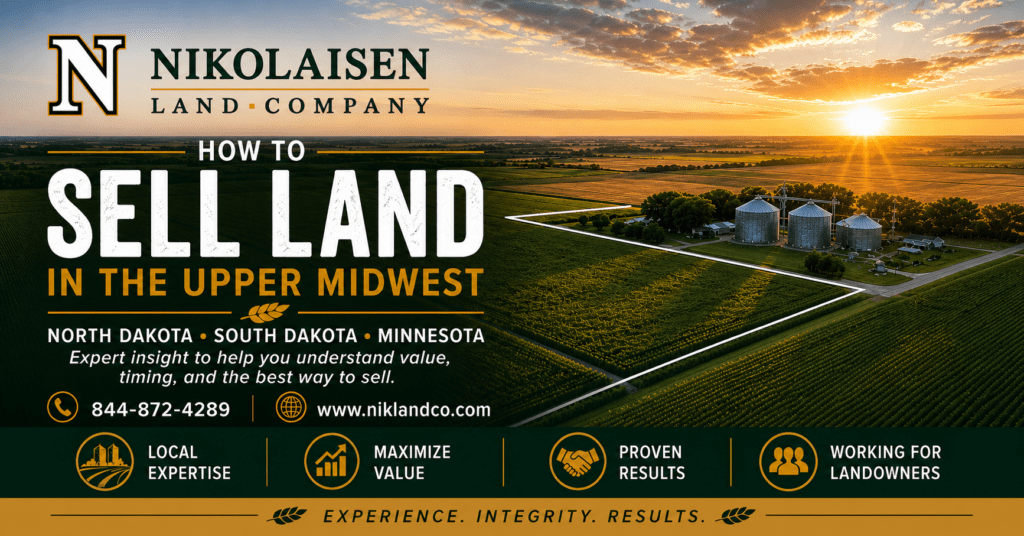
Selling land in the Upper Midwest—whether it’s farmland, cropland, pasture, CRP acres, or hay ground—is very different from selling residential real estate.
In states like North Dakota, South Dakota, and Minnesota, land is a business asset. Buyers are focused on productivity, income potential, and long-term value, not just location.
If you’re thinking about selling land, understanding how this market works can make a significant difference in your final price.
Understanding Land Value in North Dakota, South Dakota & Minnesota
One of the most common questions sellers ask is:
“What is my land worth?”
The answer depends on more than just recent sales.
Land buyers in the Midwest evaluate:
Different land types also carry different value drivers:
The key is positioning your land based on what buyers in your area value most.
When Is the Best Time to Sell Land in the Midwest?
Timing plays a major role in land sales.
In North Dakota, South Dakota, and Minnesota, the most active times are:
While land can sell year-round, aligning your sale with the ag cycle often leads to stronger interest and better offers.
Who Is Buying Land Right Now?
Understanding your buyer helps you market your property effectively.
Most land buyers in the Upper Midwest fall into three categories:
Each buyer type sees value differently—your marketing should reflect that.
Auction vs. Private Sale: Which Is Better?
This is one of the biggest decisions when selling land.
Land Auctions
Private Listings
The best method depends on your land, location, and current market conditions.
How to Prepare Your Land for Sale
Serious buyers expect solid information. The more prepared you are, the more confidence—and stronger offers—you’ll receive.
Before listing and while preparing to sell your land, gather:
Think of it this way:
The more your land looks like a well-documented investment, the more valuable it becomes.
Marketing Land in Today’s Market
Selling land today requires more than just putting it on the market.
Effective land marketing includes:
Many buyers looking for land in North Dakota, South Dakota, and Minnesota are not just local anymore—they’re searching across multiple states.
Why Local Expertise Matters When Selling Land
Land markets vary significantly—even from one county to the next.
Working with a team that understands:
can make a measurable difference in your outcome. Work with a team to receive a land valuation to get an accurate understanding of your land’s value.
Final Thoughts: Selling Land Is About Positioning, Not Just Listing
Whether you’re selling cropland, pasture, CRP acres, or hay ground, the goal is the same:
Position your land as a high-value, income-producing asset
The sellers who achieve the best results typically:
Thinking About Selling Land in the Upper Midwest?
At Nikolaisen Land Company, we work with landowners across North Dakota, South Dakota, and Minnesota to help them understand their options and make informed decisions.
If you’re considering selling—or just want a clearer picture of what your land might be worth—we’re happy to have a conversation.Yo
No pressure, just straightforward insight based on the current market.